Part of the beauty of film photography as a hobby is that with a minimal investment in equipment and materials, it remains one of the least expensive artistic endeavors one can get involved in. You really don't even need to buy or own a camera.
With pinhole photography, you can turn a
matchbox, a
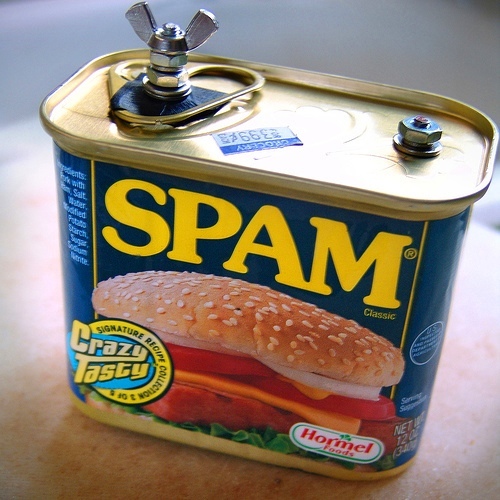
can of spam, or really
any light-tight box into a working camera. All that's really required to purchase is the film and developing.
Further down the rabbit hole, we enter the world of Lomography and toy cameras. Lomography is a catchall phrase coined by an Austrian company that has come to include the LOMO LC-A, the Diana+, the Holga, and a huge list of other toy cameras with limited functionality. There are toy cameras (like the LC-A) that go for upwards of $200, but for sheer fun and a low price, my favorite of the bunch is the Holga. It's a pretty good platform to hack and to mod, some examples of that can be found on
Squarefrog's site. I've also done my fair bit of tutorials
on this blog.

Shooting with expired film is a terrific way to save money. I recently purchased newly expired film on ebay and saved a huge amount (20 rolls of Kodak MAX 35mm / 36 exposures for $18 including shipping). The way film is stored has a lot to do with how long it will hold for. The expiration date is just an indicator given by the manufacturer by which they recommend having your film developed. Film can be stored frozen indefinitely, refrigerated for years, and on the shelf for months. I've seen beautiful results on
Flickr from people that shoot with expired film. The results can be subtle or dramatic, but the serendipitous nature of photography is what helps make it exciting, right?
 photo credit: pixelatedscraps via Flickr
About developing: Most hour photo labs have to send out for 120 format film like the Holga uses. As much as I dislike Walmart, it does do a fair job of developing color 120 film and will even cross process you film if you specify that on the package. There's a
nice how-to over here.
If you shoot black and white, I
strongly encourage you to invest the $50 or so it would take you to get a setup to develop your own film. It's not even about saving money on developing (although you will), but you have so much more control over how the film turns out than when you hand it over to a lab, even a good one. There's a pretty decent
Instructables post that outlines the process, and I intend to create one that details my own process in the near future. I think it's a lot easier than most people suppose, though like anything in photography, it can get very nuanced very quickly. Basically, if you can make cookies from scratch you can develop film. It's all about mixing stuff and timing.
From there, most photo labs have a scanning/digitizing service to get your pictures onto a CD. There are any number of services online or through iPhoto that will help you get some really nice prints for a pretty decent price. Even Flickr has a service like this.
If you're not getting prints made by a photo lab and you've decided photography is a fun hobby, you can and should invest in a decent film scanner. A low-end combination flatbed/film Epson goes for about $150, and the Canon that I currently use (Canoscan 8800F, and I'm very pleased with it) was around $180 after shopping around online.
So, yeah. Getting back to my point at the first part of this post, photography can be extremely inexpensive, but it is also very easy to get swept up in all of the "stuff" and spend way too much. Photography is a simple process; we're exposing a plane of sensitized film to a beam of light coming in through a lens. No, scratch that last part, if you're doing pinhole photography, you don't even need a lens. Then it's a matter of revealing the latent image on the film with the right mix of chemicals and having prints made or scanning the image into a computer.
The basic tools for this process have been around for decades yielding beautiful pictures, but in a pixel-perfect world it's easy to become obsessed with digital perfection. In my opinion there is still plenty of room for creativity and originality in the area of film photography. I use a camera much like a sketchbook; to record scraps and bits of my life in an artful way. Let the digitally-obsessed have their 12 megapixel DSLRs. As long as I've got a crappy camera and a roll of film, I'm happy.


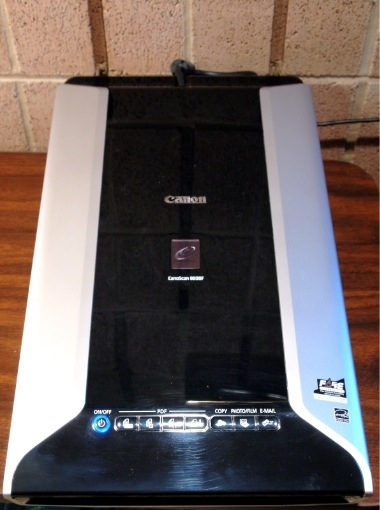 After playing with the CanoScan 8800F combination film/flatbed scanner, I've taken the time today to write up a quick review of the unit, and also to give some helpful tips when scanning film. For all of you full-frame nuts out there that shoot into the sprocket holes or to the very edges of your medium format film, I invite you to skip ahead in the review, as I ran into a bit of a software issue when scanning without the film masks provided.


 Posts
Posts